
What 15:1 means at the tub: a plain guide to concentrated shampoo

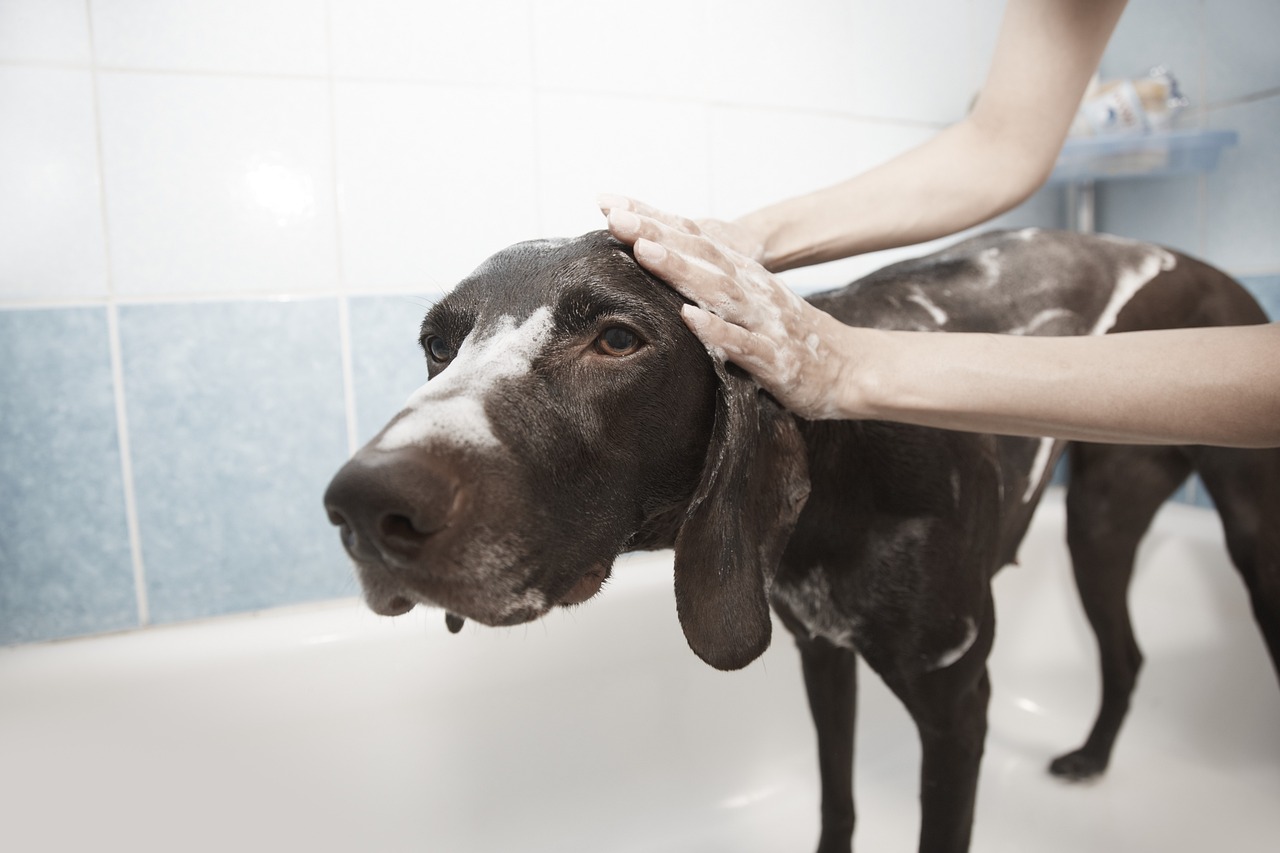
What 15:1 means at the tub: a plain guide to concentrated shampoo
The two most expensive bottles on our shelf are gallon jugs, and they are also, per wash, the cheapest thing we sell. That contradiction confuses people, so here is the arithmetic in full.
The ratio, translated
A concentrate labelled 15:1 means fifteen parts water to one part shampoo. One gallon of concentrate makes sixteen gallons of working solution — the gallon you bought plus fifteen more of water.
In practical terms: a standard grooming bath uses somewhere between four and twelve ounces of diluted solution depending on the size and coat of the dog. Call it eight ounces as an average. Sixteen gallons is 2,048 ounces, which is roughly 250 baths. Even a large household dog bathed twice a month would take a decade to get through it.
That is why a professional bench buys the jug and a household usually should not, unless you have several dogs, a very large one, or you foster.
Mixing it properly
Use a marked bottle. Guessing “a good squirt” is how people end up either wasting product or leaving residue in the coat.
- For a 16 ounce mixing bottle at 15:1, that is 1 ounce of concentrate and 15 ounces of water — two tablespoons of concentrate, near enough.
- Add water first, then the concentrate. Doing it the other way round produces a bottle of foam and very little liquid.
- Warm water mixes faster and rinses easier than cold.
- Mix what you will use today. Diluted shampoo has far less preservative headroom than the concentrate and can grow things over weeks in a warm bathroom.
What happens if you use it neat
Three things, none of them good. It costs fifteen times more per bath than it should. It is very hard to rinse out of a thick coat, and the residue left behind is a common cause of the “he was itchy after his bath” complaint. And on a dog with sensitive skin, a full-strength surfactant load is exactly what you were trying to avoid by buying a gentle formula in the first place.
Choosing the concentrate
The same rules apply as with any shampoo — buy for the skin, not the scent. In a gallon those decisions are more consequential because you will be living with the choice for a long time.
- A classic clean-rinsing formula suits most coats and is the safest jug to own if you only want one.
- Oatmeal with baking soda aims at odour as well as dryness, which is useful for dogs that get damp and stay damp.
- A matching conditioner concentrate is worth having on any long or double coat. It dilutes the same way.
Storage
Keep the jug closed, upright, out of direct sun and somewhere that does not freeze. A jug stored in a cold garage over a Brooklyn winter can separate; it usually recovers with a warm-up and a shake, but it is easier not to let it happen. Write the date you opened it on the handle — most concentrates are good for a couple of years unopened and about a year once opened.
Decanting for the tub
A gallon jug is unwieldy over a wet dog. Keep a 16 or 32 ounce squeeze bottle for actual use, refill it before each bath, and leave the jug on the shelf. A bottle with a flip cap is safer than a screw cap when one of your hands is holding a collar.
Is it worth it for one dog?
Honestly, often not. If you have one short-coated dog bathed once a month, a 16 ounce bottle will last you six months and takes no arithmetic. The concentrate makes sense when you have multiple animals, a large breed, a coat that needs washing often, or you are running a home grooming setup for friends and neighbours.
We stock both sizes for exactly that reason, and if you ask us at the counter which one suits your situation, the answer will sometimes be the small bottle. That is not us being modest — a jug that goes off on a shelf is a worse deal than a bottle you finish.
A note on rinsing
Whatever dilution you use, the rinse is the part that decides whether the bath was any good. Run water until it runs completely clear, then keep going for another thirty seconds, paying attention to the armpits, the groin and the base of the tail where product collects. A properly rinsed coat squeaks slightly between the fingers. A poorly rinsed one feels faintly slick, and that dog will be scratching by evening.
Working out your own cost per bath
If you want to compare a jug against a bottle honestly, the sum is short. Divide the price of the concentrate by the number of ounces in it, then divide again by the dilution factor plus one. A gallon is 128 ounces; at 15:1 each ounce of concentrate becomes 16 ounces of working solution, so a gallon yields 2,048 ounces of usable shampoo. Divide the price by that number and you have your cost per ounce at the tub.
Do the same for the ready-to-use bottle — price divided by ounces, no second step, because it is already at working strength. Now compare the two figures against how much you actually use per bath. For most single-dog households the ready-to-use bottle wins on convenience long before the concentrate wins on price, because the concentrate’s advantage only appears after two hundred baths.
The one case where the sum flips immediately is a household with three or more dogs, or one very large one. A standard poodle takes four times the shampoo of a terrier, and at that volume the jug pays for itself inside a year.
Two small habits that make a jug last
Keep a funnel with the jug so refilling the squeeze bottle does not become a two-handed spill. And keep the mixing bottle labelled with the ratio in marker — not because you will forget this month, but because in six months you will genuinely not remember whether the bottle in the cupboard is concentrate or working solution, and guessing wrong in either direction is a wasted bath.